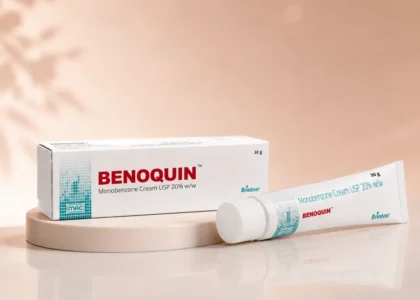
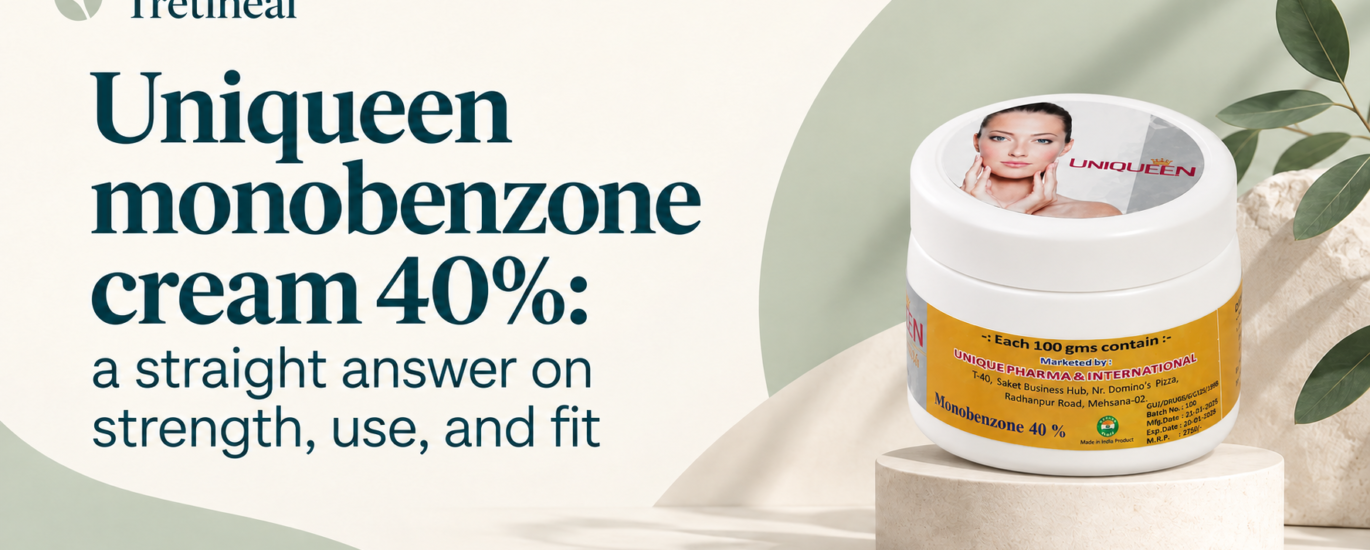
Uniqueen monobenzone cream 40% comes up a lot once someone’s already tried the 20% version and wants to know if stepping up makes sense. Good question. Here’s the honest answer.
What's actually in the jar
Monobenzone strips pigment from skin. It targets melanocytes, the cells that make color, and gradually reduces what they produce in the area you apply it to.
The 20% strength is the reference point most guidance builds around. 40% doubles that. More concentration usually means a stronger effect per use, and a shorter path to visible change. It also means less room to get sloppy with application.
Where 40% actually makes sense
Size of the area matters more than most people think. A small patch on one hand doesn’t need 40%. A larger stretch of skin, say most of a forearm or a section of the back, is where the stronger version starts pulling its weight.
Time also plays into it. If you’ve got a specific timeline in mind, whether that’s a season, an event, or just wanting faster progress after months on 20%, the higher concentration cuts down the wait.
There’s a third case worth mentioning: skin that’s already shown it tolerates monobenzone well. If 20% produced steady, manageable results with no real irritation, that track record is what makes 40% a reasonable next step, not a gamble.
None of these situations replace a patch test. They just explain why someone lands here in the first place.
What changes when you double the strength
More potent per application. Skin responds faster at 40% than at 20%. That’s the whole point of stepping up.
Less forgiving of mistakes. A slightly heavy hand barely matters at 20%. At 40%, the same habit raises irritation risk.
Spread risk doesn’t go away. Depigmentation can show up outside the treated zone, even at lower strengths. Going stronger doesn’t fix that. It just raises what’s at stake if it happens.
None of this means 40% is dangerous when you’re careful with it. It just asks for more attention than the entry-level strength.
Common mistakes worth skipping
Assuming a bigger number means a better result. It doesn’t work that way here. The outcome is largely permanent, so faster isn’t automatically the goal.
Skipping the patch test because you’ve used monobenzone before. Test a small spot anyway. Your skin’s reaction to 40% isn’t the same as its reaction to 20%.
Applying to skin that’s still irritated or broken. Wait for full healing first.
Believing any seller who promises a fixed timeline. Nobody can guarantee that. Skin responds differently from person to person.
How to apply it without overdoing it
- Use a thin layer. Strength does the work, not thickness.
- Match the frequency on the label. Don’t add extra applications to speed things up.
- Check your skin weekly. Mild dryness is normal. Anything past that isn’t.
- Avoid direct sun on treated areas.
- Stop immediately if you see burning, blistering, or color loss spreading beyond where you applied it.
What to expect, roughly
Weeks 1-3: skin adjusts. Some dryness or light flaking is normal here.
Months 1-2: early lightening usually starts showing.
Months 3-6: tone becomes more consistent with steady use.
Past 6 months: results generally settle, though this varies a lot by person and by how much skin you’re treating.
A bigger treatment area takes longer than a small patch. That’s just math, not a flaw in the product.
The bottom line
Uniqueen 40% is a real jump from the standard strength, not a small tweak. Respect that gap. Patch test first, apply thin, and pay attention to what your skin’s telling you instead of assuming a bigger percentage automatically means a better result.
Tretiheal carries Uniqueen Monobenzone Cream 40% alongside the 20%, 60%, and 80% versions, so you can compare strengths before choosing what actually fits your situation.